ServicesSolar System Add-Ons
Solar System Add-Ons in Clearfield
Your power use changes. A new car, a hot tub, more people at home. We add panels, EV charging and monitoring to the system you already own, sized to your real bills, so more of what you use comes from your own roof line of sunlight.
When an add-on makes sense
Most solar systems are sized to match the power bills from the year they were built. Then life moves on. You buy an electric car, finish the basement or trade a gas furnace for a heat pump. The panels keep working fine, but they now cover a smaller share of what your home uses, and the monthly bill starts to climb again.
An add-on closes that gap without tearing anything out. We start by reviewing your current equipment, your recent usage and how much more load your setup can carry. Then you get a straight answer on what to add, or whether adding anything is worth it at all.
Around Clearfield, hot summers that run the air conditioner and short winter days both put real demand on a system. We size additions to cover the months that cost you the most, not just a sunny average.
What we can add to your system
- More panels
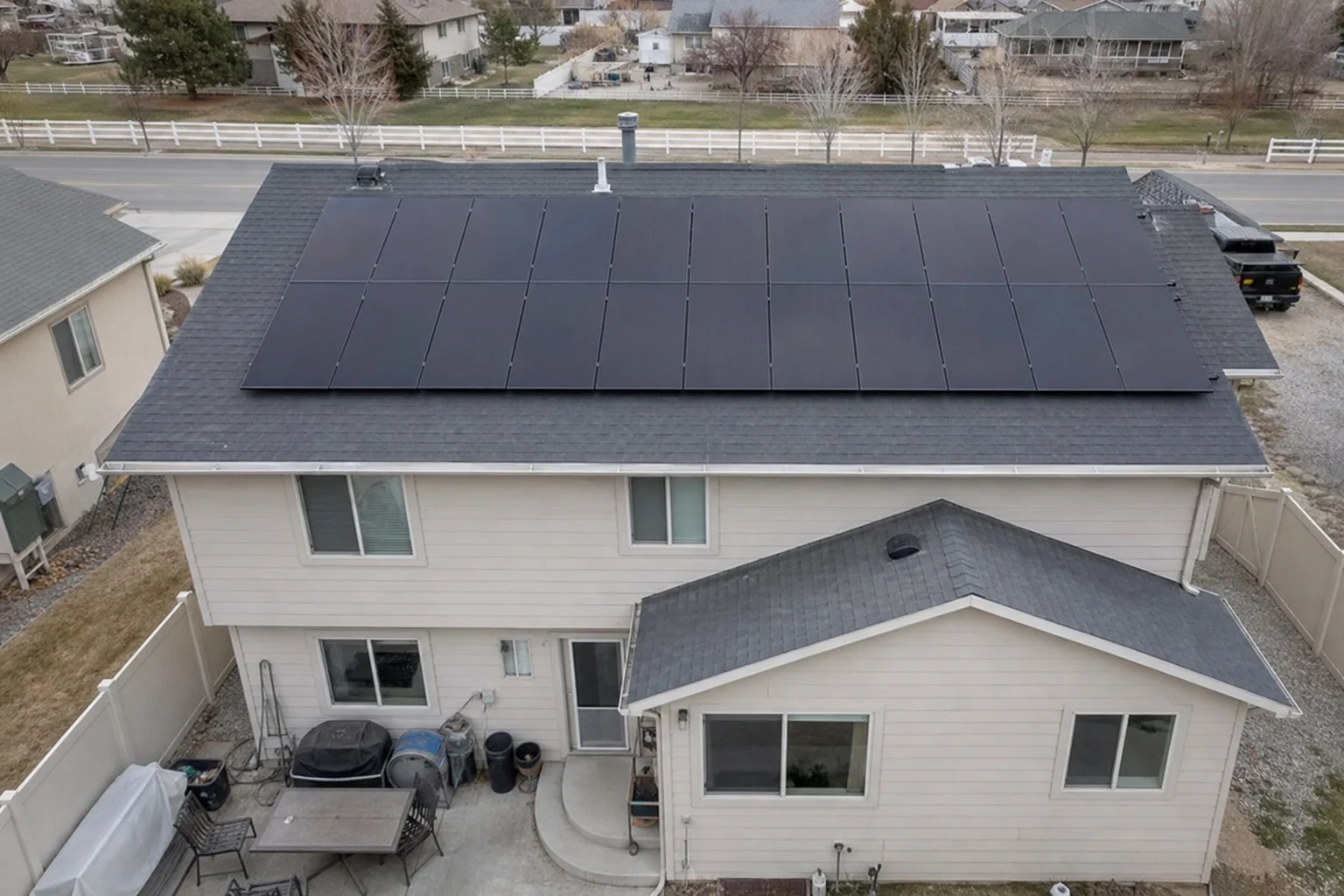
- We add panels to grow your system's output. We match them to your existing inverter or add a new one, so the old and new parts work together instead of fighting each other.
- EV charger hookup
- A home charger can draw as much as a central air unit. We install a dedicated circuit and charger and set it up so you can charge when your panels are producing.
- Energy monitoring
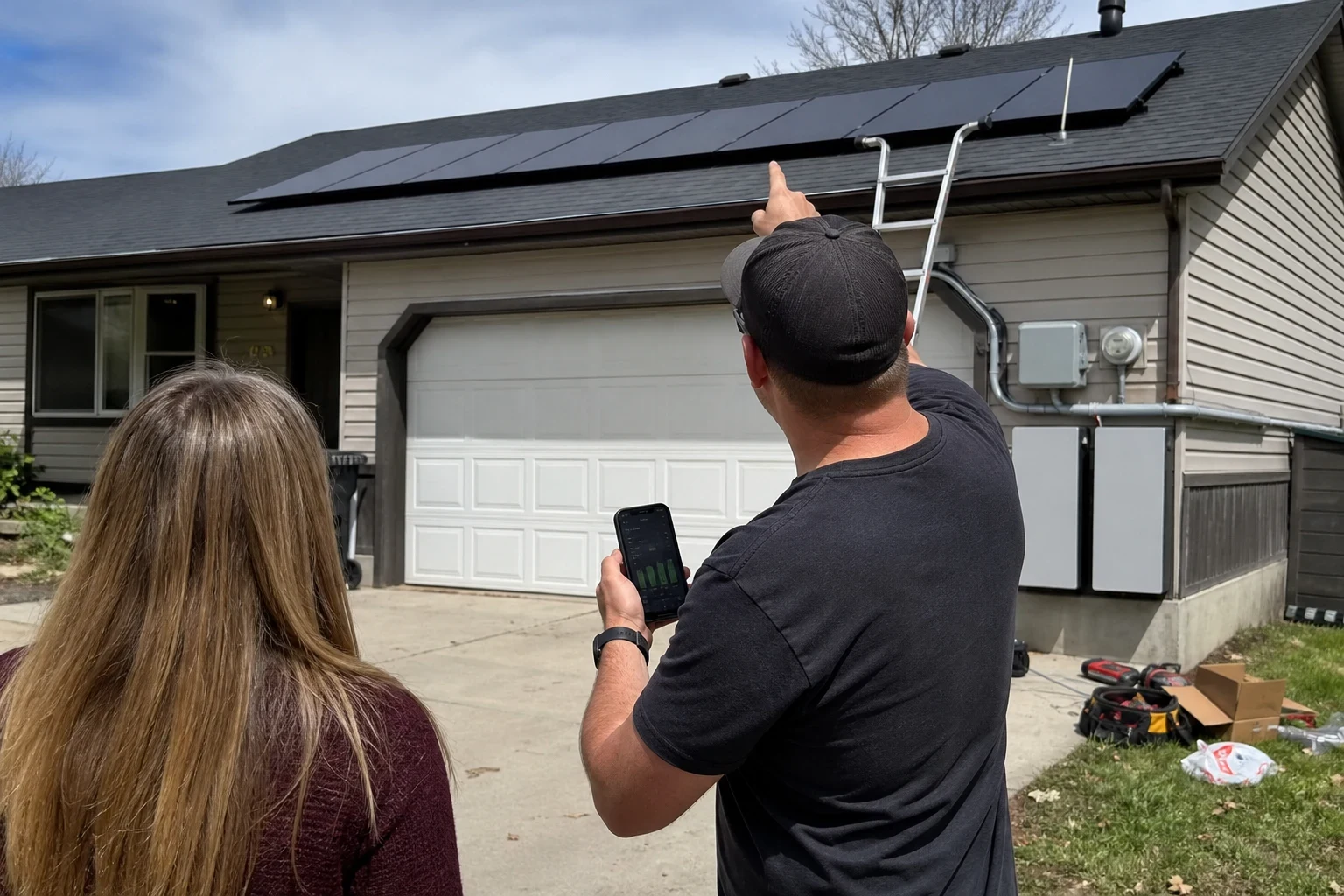
- A monitor shows what your panels make and what your home uses, hour by hour. You see where the power goes and can shift big loads like laundry to sunny hours.
- Electrical panel upgrades
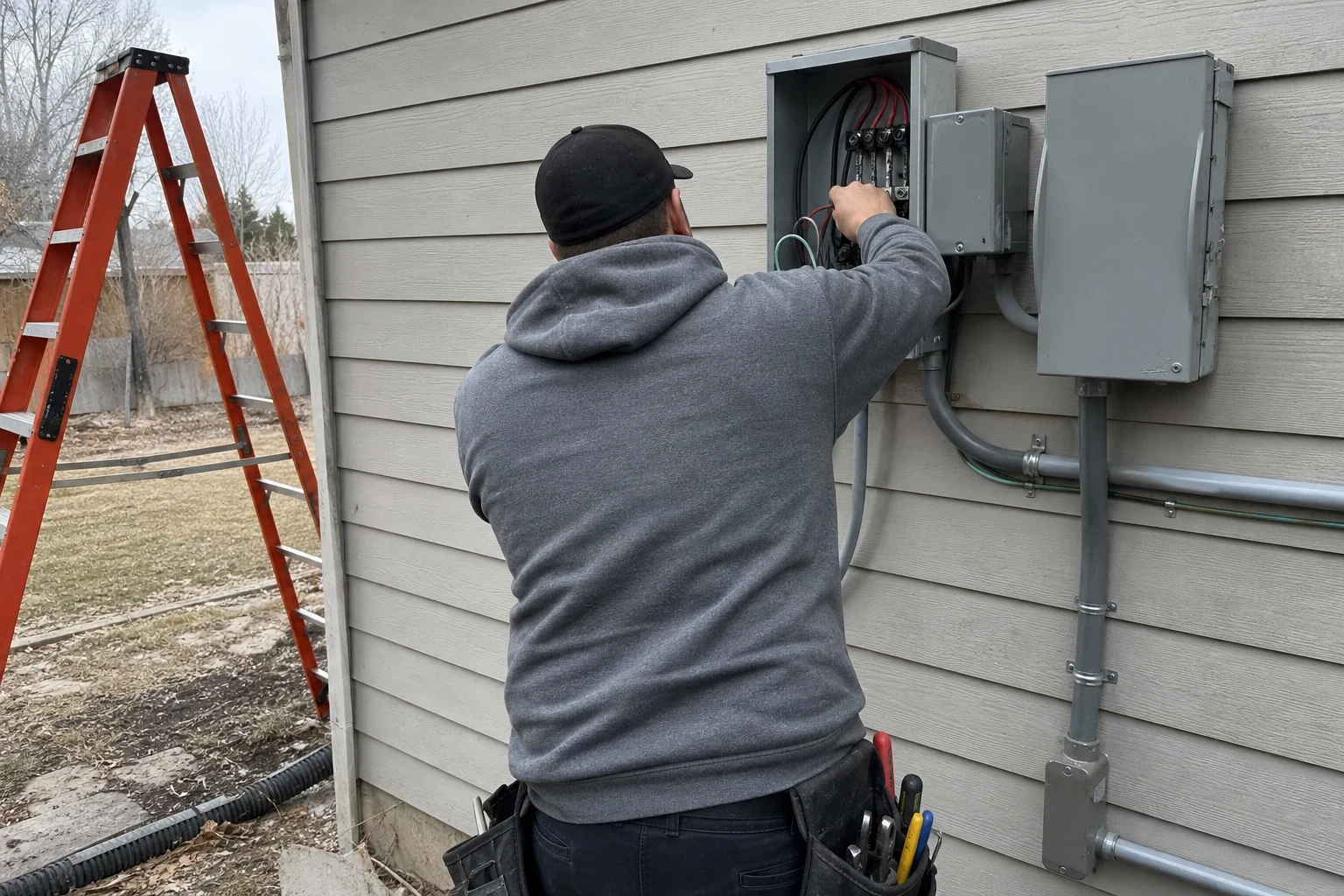
- Older homes often have a main panel with no room left. If an add-on needs more capacity, we upgrade the panel and handle the permit and inspection.
- Pairing with storage
- If you want to keep daytime power for the evening, we can plan an add-on with a battery in mind. Our Battery Storage page covers that work in detail.
Signs your system needs a boost
Your bills are climbing again
If the power bill is drifting back up while the panels look fine, your use has likely outgrown the system.
You bought an electric car
Charging a car at home can add a big chunk to your monthly use. Most systems were never sized for it.
You added big appliances
A hot tub, a heat pump, a shop or a new freezer all draw steady power. More panels can cover that new load.
You can't tell what's working
If you have no idea what your system made last month, monitoring will show you, and it often reveals easy savings.
Your breaker panel is full
No open slots, or breakers that trip when several things run at once, usually means the panel needs an upgrade before anything else goes in.
What moves the price
Every add-on is priced on its own, after we see your setup. The biggest swing usually comes from what your current equipment can handle. Ask us about $0 up front when you call.
Size of the addition
Four more panels cost less than twelve. We size it to your new use so you don't pay for output you won't need.
Your inverter
Some inverters have room for more panels. Others are at their limit and need a second inverter or new parts.
Main panel capacity
A full or older electrical panel may need an upgrade before an EV charger or more panels can tie in.
Wire runs and access
A charger in a detached garage or a long run from the meter means more wire, more trenching or more labor.
Permits and utility approval
Permit fees and utility paperwork are part of the job. We include them in the written quote so they don't show up later.
How an add-on job runs
- 1
A phone call first
You call, and we ask about your current system and a few recent bills. If it's easier, we can set up a free virtual appointment and look at your equipment over video.
- 2
We check what you have
We go over your inverter, wiring and main panel to see how much they can take. You get a written quote that lists each part and step, so the price isn't a guess.
- 3
Permits and utility paperwork
We pull the permit and file the forms with the utility. Most add-ons need both before the new equipment is allowed to run.
- 4
Install day
Most add-ons take a day or less. We keep the work outside where we can, cut power only when we must, and clean up before we leave.
- 5
Final sign-off and walkthrough
Once the inspector passes the work and the utility gives the go-ahead, we switch the new equipment on. Then we walk you through reading your monitor or using your charger.
Add-on questions we hear
Can I add panels to a system someone else installed?
Often, yes. We need to see the inverter, the panels and the wiring first. If the parts are a poor match, we'll tell you, and explain what it would take to make them work together.
Will adding panels mess up my existing equipment warranty?
That depends on the terms from your original installer and the equipment makers. Bring whatever paperwork you have and we'll go over it with you before any work starts. We won't touch equipment in a way that puts those terms at risk without telling you first.
Do I need a battery to charge an electric car with solar?
No. Your panels can charge the car during the day directly. A battery helps if you mostly charge at night, since it holds daytime power for later.
Will an add-on lower my power bill?
If your use has gone up, adding output usually brings the bill back down. How much depends on your usage, the size of the addition and how your utility credits extra power. We show you the numbers from your own bills before you decide.
Do you work outside Clearfield?
Yes. We do add-on work across the area, including Layton, Syracuse, Roy, Clinton and Ogden. The Service Areas page lists the rest.
Find out what your system can handle
Tell us what's changed at home and what your bills look like. We'll tell you what to add and what it will cost. If a friend goes solar on your referral, you earn $1,000.