ServicesSolar Panel Repair
Solar Panel Repair in Clearfield
When your system stops producing, you go back to buying every kilowatt from the utility. We find the cause, show you what failed and fix it so your panels carry your home's power again. Most problems come down to one part, not the whole system.
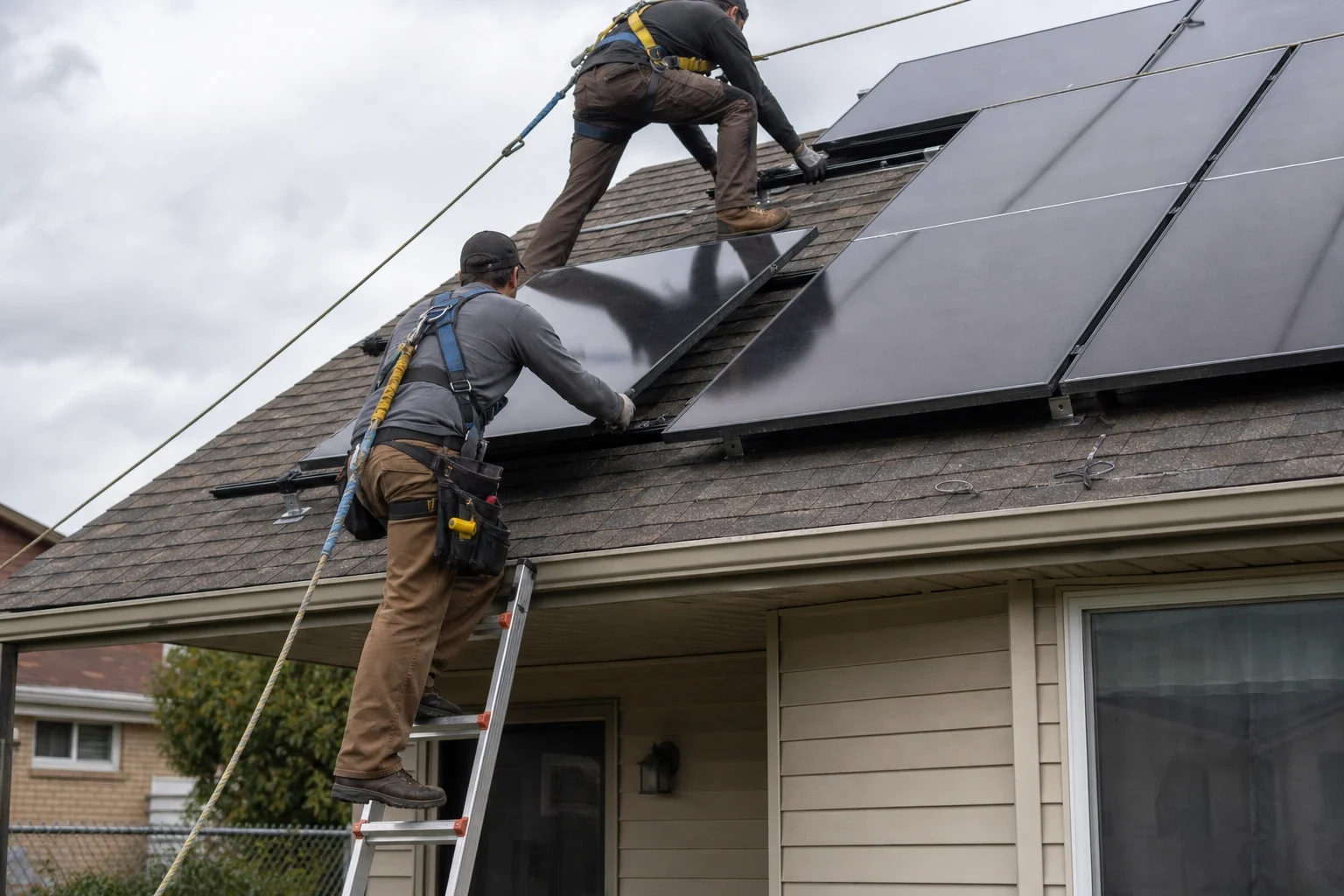
When a Repair Is the Right Call
Solar panels have no moving parts, so most of the system lasts a long time. The weak spots are the pieces around the panels: the inverter, the wiring, the connectors and the breakers. When one of those fails, output drops or stops, and your power bill climbs back up without much warning.
A repair makes sense when the panels themselves are sound and the trouble is a part we can swap or a connection we can redo. That covers most of the calls we get. If a fix would cost close to what new equipment would, we tell you that plainly and let you decide.
We work on systems across Clearfield and nearby towns like Layton, Syracuse and Roy.
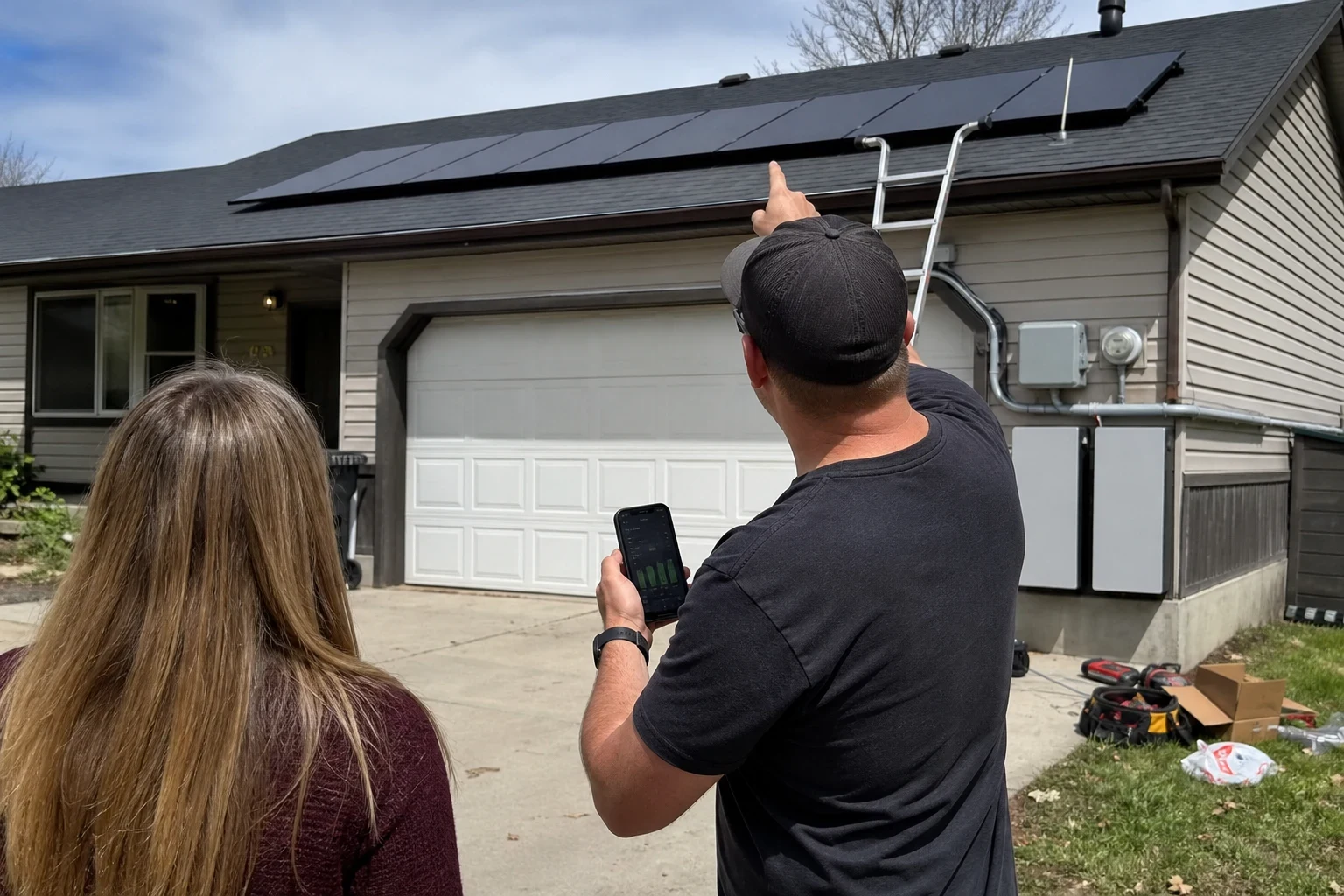
What a Repair Visit Covers
- 01
Monitoring and error code review
We start with your monitoring app and the inverter display. Error codes and production history often point straight at the problem before we touch a wire.
- 02
String and panel testing
We test each string with a meter to find which run is low or dead. That narrows a 20-panel array down to the one panel or connector at fault.
- 03
Inverter and microinverter checks
Inverters do the hardest work in the system and are the most common part to fail. We check for faults, test outputs and replace the unit when it cannot be saved.
- 04
Wiring and connector repair
Loose or corroded connectors and wires chewed by rodents cause a lot of quiet output loss. We replace damaged runs and reseat connections so they stay tight through freeze and thaw.
- 05
Photos and a written estimate
You see what we see. We send photos of the failed part and a line-item estimate before any work starts.
Questions about Solar Panel Repair?
Call(801) 348-3984Signs Your System Needs a Repair
Production shows zero
If your app reads zero on a clear day, something is off. It can be as simple as a tripped breaker or as big as a dead inverter.
Your power bill jumped
A bill that climbs back toward pre-solar levels in spring or summer usually means the system is underproducing. It is often the first sign people notice.
Warning lights or error codes
A red or flashing light on the inverter means it has shut itself down or found a fault. Write down the code and tell us when you phone.
One section produces less
When the monitoring shows one string or panel far behind the rest, a connector, a wire or a panel has likely failed.
Visible damage after a storm
Cracked glass from hail, a bent rack or a loose wire hanging down needs a look. Damaged panels can let in moisture and get worse.
How a Repair Goes
- 1
Talk it through by phone
Tell us what you are seeing and what equipment you have. We can also set up a free virtual appointment to look at your monitoring together.
- 2
On-site diagnosis
We come out, shut the system down safely and test it piece by piece. Most diagnoses take a few hours, not days.
- 3
Clear answer and estimate
We show you the photos, explain what failed and give you a written price. You decide before we do any work.
- 4
Fix, test and restart
We make the repair, bring the system back online and confirm it is producing. Then we check the monitoring with you so you know what normal looks like.
What Moves the Price of a Repair
Most repairs cost far less than people expect, because the fault is usually one part. The price depends on what failed and how hard it is to reach. You get the full number in writing before we start.
- Which part failed
- Reseating a connector or resetting a breaker is a small job. Replacing a string inverter or several microinverters costs more in parts.
- Manufacturer coverage
- Many panels and inverters carry their own manufacturer warranty. When a part is still covered, we help you sort out the claim and the cost drops to labor.
- Age of the equipment
- Older inverters and panels can be discontinued. Finding a compatible replacement can take more time or a different part.
- Access to the array
- Panels that are easy to reach go faster. Tight spots or arrays that need extra equipment to reach add time.
Solar Panel Repair Questions
Is it worth fixing an older system?
Usually, yes. Panels lose output slowly over decades, so an older array with a new inverter often has years of good production left. If the numbers do not work, we say so and walk you through your options, including new solar panel installation.
Do you work on systems another company installed?
Tell us the brand and model of your panels and inverter when you phone. We will let you know up front whether it is equipment we can work on.
Why does my system make so little power in winter?
Short days, a low sun and snow cover all cut winter output, and that is normal. A system that still lags in late spring or summer is a different story and worth a check.
Can you diagnose anything without coming out?
Often we can narrow it down. On a free virtual appointment we look at your monitoring and inverter codes with you, which can save a trip or tell us which parts to bring.
Is it safe to reset the inverter myself?
Flipping the solar breaker off and on is something your installer may have shown you, and it is fine to try once. Do not open the inverter or touch the wiring. Solar circuits stay live whenever the sun is up.
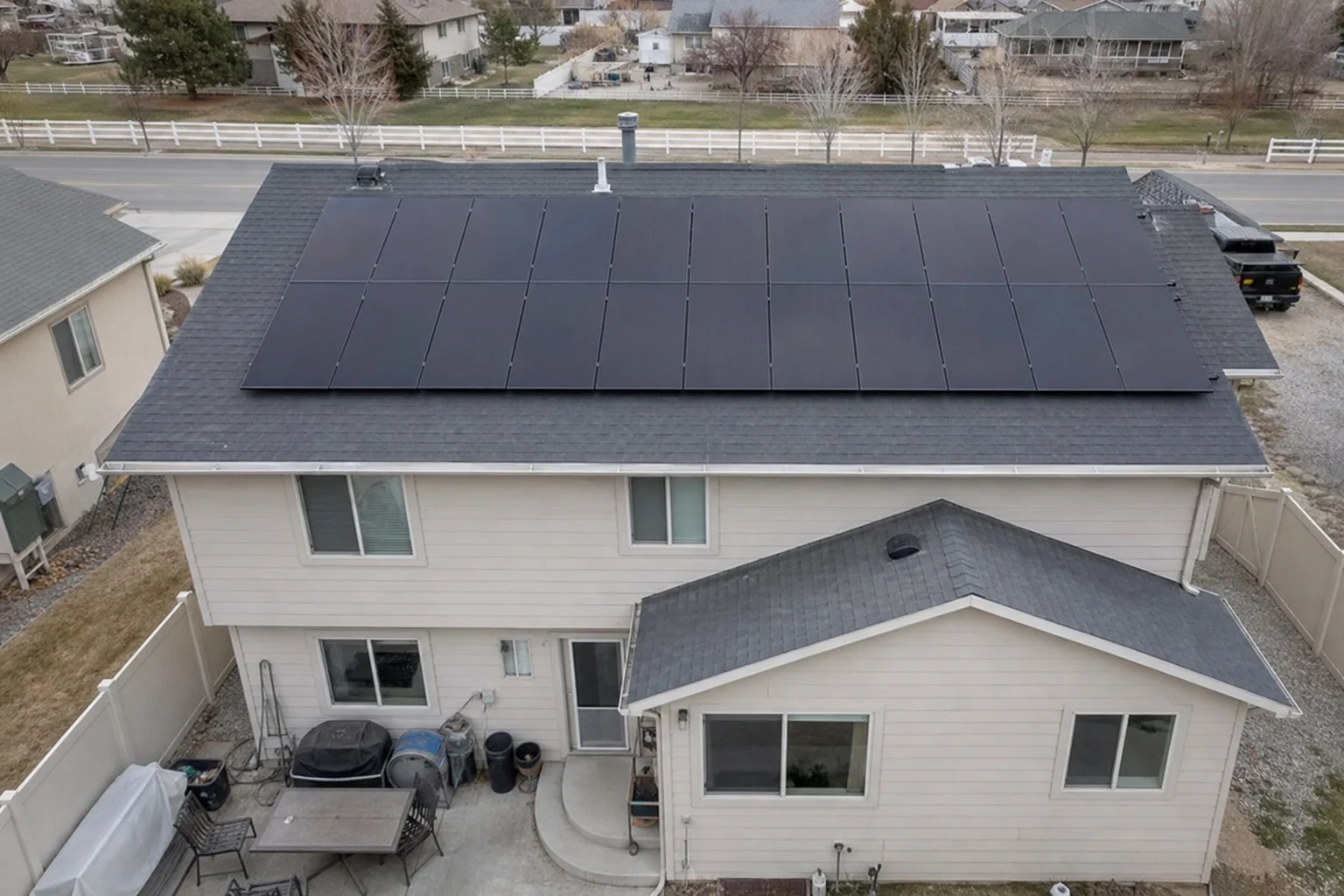
Get Your Panels Working Again
Every day the system sits idle, your home buys power it could be making. Tell us what you are seeing and we will help you find out why.